


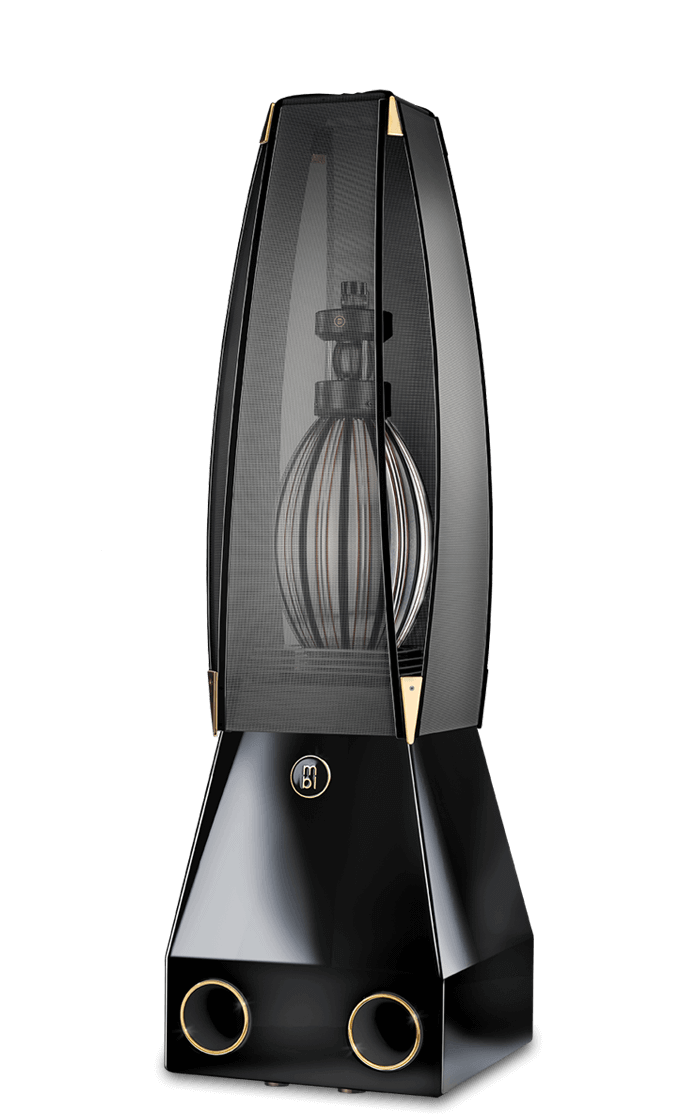
Jürgen Reis, the brilliant engineer behind MBL of Germany’s celebrated line of loudspeakers and electronics—and a longstanding member of TAS’s High-End Hall of Fame—has retired from MBL International. Although he will remain available to assist customers, dealers, and former importers, he will no longer design or develop products or attend and run shows for the company to which he devoted more than 40 years of his life, creating, engineering, and perfecting scores of outstanding products.
His retirement marks the end of a brilliant career in high-end audio, one that began when he was 14 years old and needed an amplifier and loudspeaker for the electric guitar he played in a rock band. Using a technical manual as his guide, he bought secondhand parts and soldered them together. Magically, the amplifier and speaker worked. That experience set him on the path to a degree in electrical engineering.
Toward the end of his university studies, Reis attended an audio show in Berlin and heard the first iteration of the MBL Radialstrahler, the Model 100—a unique three-way omnidirectional loudspeaker. Although the sound was far from optimal, he thought “the concept was genius.”
After graduating from university, Reis contacted several of the companies he had visited at the Berlin show while looking for a job. MBL met with him and offered him a position. At the time, the company was marketing the Model 100 loudspeaker, the brand-new 4010 preamplifier, and the six-month-old 4020 parametric equalizer. The equalizer was necessary because the loudspeaker’s frequency response was so uneven that it had to be corrected.
After a few weeks at the company, Reis asked whether he could bring in a preamplifier he had built while studying in Frankfurt. Because he had not had access to sophisticated measuring equipment, he had designed it according to what he thought and felt ought to be right. He was curious to see how it would perform on MBL’s suite of Hewlett-Packard test equipment.
As it turned out, Jürgen’s preamplifier measured far better than MBL’s newly released 4010. Mr. Lehnhardt—the “L” in MBL—and Mr. Meletzky—the “M”—were so impressed that they immediately put Reis in charge of developing all future electronics. Unsurprisingly, his first assignment was to design a new preamplifier, the 5010, which later evolved into the legendary 6010, now in its 6010 D iteration.
After two years at MBL, Reis began working on the Radialstrahler loudspeaker, using carbon fiber to design a new tweeter. The Model 100’s original tweeter and midrange membranes were made from slices of aluminum, but the metal gave the loudspeaker a highly colored sound. Reis sought a material that would reduce coloration and distortion while producing a smoother, broader frequency response. It took him more than a year to perfect the new carbon-fiber tweeter. He then applied the same techniques to the midrange driver.
Thanks to Reis, MBL was able to introduce a greatly improved Radialstrahler in 1986: the now-famous MBL 101, with carbon-fiber tweeter and midrange drivers. The initial reaction from the audiophile press and community resembled Jürgen’s own first response to the Radialstrahler. “People liked the 101, but they didn’t understand why they liked it,” he recalled. “They had simply never heard anything that transparent—anything that sounded so much less like a loudspeaker.”
That transparency—and Reis’s own genius—helped him develop MBL’s standard-setting electronics, including the company’s first Reference amplifier, the 9010, and, in time, the 1611 Reference D/A converter and 1621 Reference CD transport.
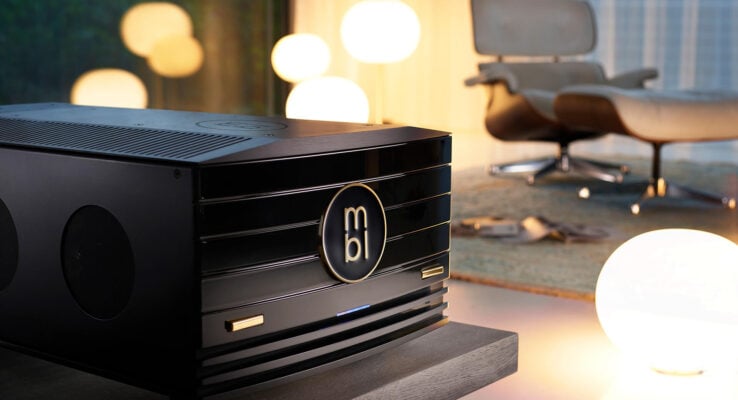
In 1990, Reis began developing the Reference Line amplifier using his ingenious “4QT” test to measure performance. He was exceptionally hands-on in his development work, creating everything himself: the schematic, the layout, the printed circuit board, and all the hand drilling and assembly. The result was the remarkable 9010 monoblock. The current 9011 is a further development of that design and can verifiably drive any phase relationship between voltage and current.
In 2005, Reis started his own recording studio and became an Apple Certified Mastering Engineer. The work required true high-resolution files—24-bit/96kHz recordings with no sample overs or intersample overs, and therefore no distortion introduced in the conversion from analog to digital and back again.
At the time, the “Loudness War” was well underway. “Each CD got louder and louder,” Reis said, “and I realized that, when listening to a D/A converter, the sound was often harsher, brighter, and more aggressive than the measurements suggested it should be. Sinewave distortion might tell us everything was fine—that there was no clipping—but, as with the 4QT test, you needed to use a complex signal, like real music.”
Reis therefore developed what became known as the “Reis test” to measure what he was actually hearing. He discovered that music could drive a D/A converter into clipping even when conventional measurements did not reveal the problem.
“When I tested the 10 most popular CDs in Germany, I found approximately 1.5 million intersample overloads in total,” he said. “On average, the signal was clipping 50 times per second. This is why digital can sound harsher than a regular THD measurement would indicate.”
After learning through the Reis test that nearly all new releases produced intersample overloads in the DAC, Jürgen resolved that MBL DACs would not pass those overloads along, even when the recordings themselves contained overs. “You can play CDs on any MBL DAC and have no intersample overloads, because I devised a way to build in headroom.” MBL DACs are immune because Reis developed a method to test for—and hear—the overloads.
During his 44 years with MBL, including 42 years as chief engineer, Reis designed 10 preamplifiers, 14 power amplifiers, six integrated amplifiers, and more than 30 MBL loudspeakers. Replacing him will be next to impossible. How does one replace an honest-to-goodness genius?
Of course, MBL will not be the first audio company compelled to confront the retirement of a star engineer or founding father. It is our hope—and Jürgen’s—that the company will continue to prosper under the guidance of a new leader who can take MBL to the same engineering heights that Jürgen achieved.
It is also our sincere hope that Jürgen enjoys the retirement he has so richly earned. Speaking for myself, Jürgen, I wish you only the best, because you are the best—the single most brilliant and inventive equipment designer it has been my honor to know.
Tags: NEWS JüRGEN REIS MBL
Trending Articles
See all
High End Vienna 2026: Loudspeakers $50,000 and Up
- Jun 10, 2026
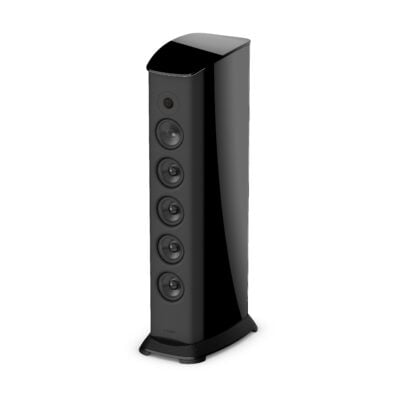
JL Audio Unveils Advanced New Full-Range Loudspeaker
- Jun 10, 2026
Atohm Sirocco 2.24
- Jun 16, 2026




By Jonathan Valin
I’ve been a creative writer for most of life. Throughout the 80s and 90s, I wrote eleven novels and many stories—some of which were nominated for (and won) prizes, one of which was made into a not-very-good movie by Paramount, and all of which are still available hardbound and via download on Amazon. At the same time I taught creative writing at a couple of universities and worked brief stints in Hollywood. It looked as if teaching and writing more novels, stories, reviews, and scripts was going to be my life. Then HP called me up out of the blue, and everything changed. I’ve told this story several times, but it’s worth repeating because the second half of my life hinged on it. I’d been an audiophile since I was in my mid-teens, and did all the things a young audiophile did back then, buying what I could afford (mainly on the used market), hanging with audiophile friends almost exclusively, and poring over J. Gordon Holt’s Stereophile and Harry Pearson’s Absolute Sound. Come the early 90s, I took a year and a half off from writing my next novel and, music lover that I was, researched and wrote a book (now out of print) about my favorite classical records on the RCA label. Somehow Harry found out about that book (The RCA Bible), got my phone number (which was unlisted, so to this day I don’t know how he unearthed it), and called. Since I’d been reading him since I was a kid, I was shocked. “I feel like I’m talking to God,” I told him. “No,” said he, in that deep rumbling voice of his, “God is talking to you.” I laughed, of course. But in a way it worked out to be true, since from almost that moment forward I’ve devoted my life to writing about audio and music—first for Harry at TAS, then for Fi (the magazine I founded alongside Wayne Garcia), and in the new millennium at TAS again, when HP hired me back after Fi folded. It’s been an odd and, for the most part, serendipitous career, in which things have simply come my way, like Harry’s phone call, without me planning for them. For better and worse I’ve just gone with them on instinct and my talent to spin words, which is as close to being musical as I come.
More articles from this editor

Read Next From Blog
See all
Buchardt Audio P300 Compact Speaker Review
- Jun 15, 2026
JL Audio Unveils Advanced New Full-Range Loudspeaker
- Jun 10, 2026


Basis Audio Looking for a New Owner
- May 19, 2026

