


The verdict is in: Vienna was a win. There were plenty of skeptics, including myself, who felt that moving our industry’s biggest show from Germany to Austria was a mistake. The initial omens weren’t promising, either. There were multiple “side” shows that required a healthy walk from the Austria Center Vienna (ACV) building. There were exhibitors complaining that they couldn’t get the room they wanted. There were fears about the sheer size and complexity of the ACV.
But all those warning signs melted away nearly instantly, as everyone—exhibitors, press, attendees—realized that the high end finally had a proper venue. A venue that wasn’t jammed to the point of busting at the seams, instead giving people (and sound) space to spread out and breathe. A venue that gave exhibitors freedom to design creative booth spaces and to incorporate meeting facilities. A venue whose room walls weren’t made of glass! In other words, a thoroughly professional and fitting setting for our industry.
As expected, there was no shortage of major product announcements. My beat was no different. In fact, there were not only new products; there was also a new product category. Combine that with rooms that almost universally sounded good, and you had a show that delivered a bracing, whirlwind four days.
Most Significant
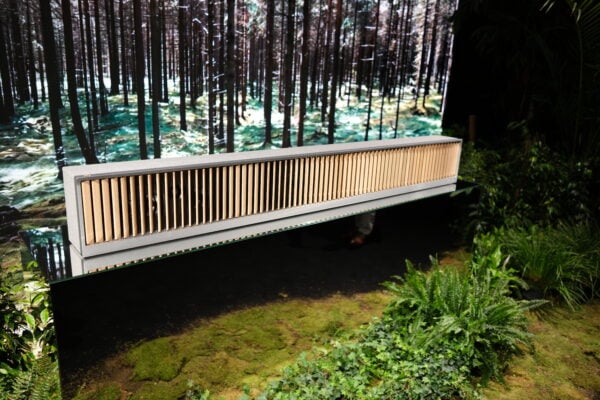
The Dynaudio Opus One. Here’s that new category I referred to. The Opus One is like nothing the veteran speaker manufacturer—nor any other speaker company I can think of—has ever made. It looks like a sound bar because it is a sound bar. But not just any soundbar; an audiophile sound bar. With an audiophile price (€13k) to match.
Designed to pair with an 85” TV, the Opus One is a handsome rectangle with dozens of individually-motorized wooden louvres in front. Using an app, these can, for instance, close off the middle section’s center channel drivers when playing stereo music. Behind the louvres sit 24 drivers and 1500 watts of power. In a demonstration, the Opus One impressed by sounding like a series of actual, standalone speakers. The price is high for a sound bar, but low for a multi-channel, active speaker system. I suspect this concept will catch on with well-healed TV junkies, especially Millennials.
Sometimes, you listen to a new speaker and it becomes immediately apparent that it’s a slam dunk. That was the case with Audiovector’s new R5 Arreté. An unimposing tower, the R5 features Audiovector’s usual mix of a ribbon tweeter and cone drivers.
In the case of the R5, these disparate elements blended seamlessly—and with a scale belying its modest dimensions. Bass, too, was surprisingly full and deep. This speaker produced far and away the best sound in my category. With that kind of performance for just €22k, this new Audiovector is poised to disrupt the market.
Bowers & Wilkins, the veteran British speaker manufacturer, has upgraded its entire flagship 800 Series. Though the model names haven’t changed, almost everything is new and improved. Many of the upgrades derive from the limited edition 804 Signature model, including the upgraded midrange unit, a new motor system for the woofer, and a crossover with hybrid copper/silver/brass wiring. The cabinet sports a new plinth, more aluminum bracing within, and thicker aluminum plates front and back. In Wilson “V” style, the midrange module has damping material between it and the low-frequency cabinet underneath.
At the show, B&W was driving the flagship 801 D5 with Mark Levinson electronics and the new Innuos Nazaré server. The resulting sound had great resolution and a sky-high “jump” factor. Prices have gone up only slightly and range from €15k–€65k.
Stenheim joined the pack of big-name speaker companies (Wilson, Magico, etc.) that have introduced subwoofers to complement their main offerings. However, Steinheim’s ALUMINE S10 is different in welcome ways. First, it is refreshingly compact for a sub that will hit a true 20Hz. The company achieved this by using two 10” drivers that face each other in an isobaric configuration. Second, at about €17k, the price isn’t crazy. Finally, the sub is incredibly easy to pair with main speakers since Steinheim has established presets—activated using an app—that optimize the sub’s settings for each model of Stenheim speakers.
In a demo of the company’s ALUMINE 5 SX with and without the sub, it was clear that the latter extended the frequency range far downward without a scintilla of roll-off or muddying of the 5’s pristine midrange.
It’s not often that an entirely new speaker brand makes its debut, but that’s what happened in Vienna this year. The smart engineers who brought you Siltech cables and Crystal Minissimo Forte speakers introduced Sphynx. Part of what is now called the Siltech Group, Sphinx bows with two models: the Element 5 (€75k) and, in my category, the Element 3(€45k). Both will reach dealers in 4Q26.
The speakers have several innovative technical features, especially in the crossover. The enclosure—made of an aluminum/Corian/HDF sandwich—uses a multiple transmission-line configuration to eliminate comb-filter effects. With their unique technical approach and unquestionable pedigree, these new Sphynx speakers are highly promising.
Auspicious Debuts
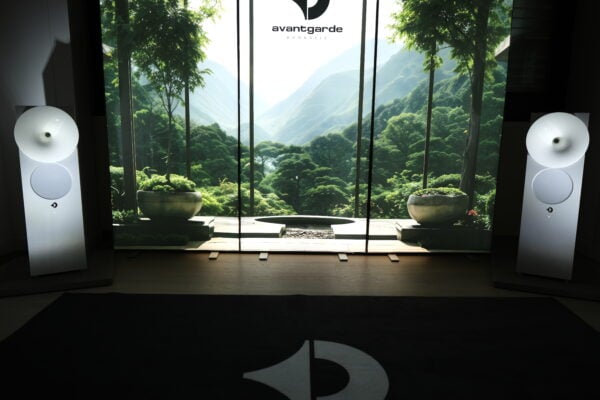
Avantgarde, the horn speaker company, surprised everyone with a new model at a price much lower than usual. The Opus One (clearly a popular name this year) uses a horn for frequencies from 700Hz–20kHz, and a 10” paper-cone woofer from there down. The speaker is active, which makes the €13k price all the more remarkable. At the show, the Opus One’s bass was solid and the overall sound was energetic, if a little hot on top. But that’s often the case with AG speakers at shows.
Acora continues to expand its terrific SRC line. JV’s report includes the more expensive SRC 5.2, but in my category the company was showing the SRC 2.2, which is expected to cost $48k. The model is a 2.5-way design, with a second woofer coming in only below 300 Hz. The Scanspeak drivers, including a beryllium-dome tweeter (“Get ‘em while you can,” says Valerio Cora) reside in a cabinet made of 1.25”-thick sheets of solid granite.
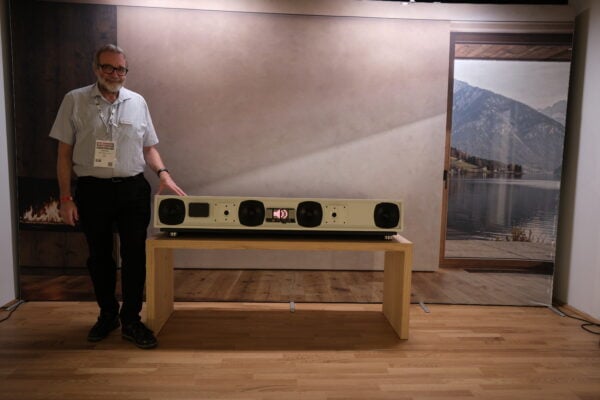
The legendary digital engineer Daniel Weiss of Weiss Engineering partnered with PSI Audio, maker of pro speakers, to create what can best be described as a wireless, self-contained system in the shape of an oversized soundbar. Weiss designed the DAC and DSP elements, while PSI contributed the drivers and amps. The as-yet-unnamed unit (I suggest Opus One) comes standard with crosstalk cancellation, which yields an incredibly spacious sound. When it comes out later this year, the device will cost about €30k.
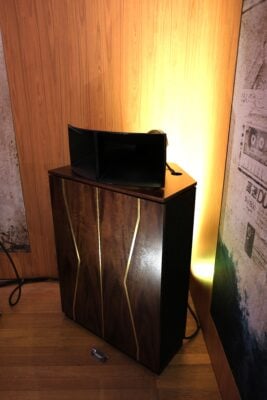
Believe it or not, Klipsch is still alive and kicking. In fact, it released an 80th Anniversary edition of the venerable Klipschorn. The new version, which will cost €30k, looks just like the old one save for some modest decorative trim. As in the original, the new Klipschorn features a horn tweeter/midrange, coupled to a 15” dynamic woofer. Unlike the original, this version is active. Its sound was quite lovely and sonorous.
In Vienna, Harbeth went digital. Well, sort of. The company says its new NLE-3 (for New Listening Experience) is their most advanced speaker to date. For one thing, it’s active, and for another it uses a lot of DSP—developed entirely in-house—to achieve the Harbeth sound. Harbeth’s says the use of DSP eliminated the need for many analog crossover components that would have smeared the sound. Most unexpectedly, the amps and DSP are outboard. Price will be €23k.
Dynaudio presented its updated Confidence i Series. The new models, which range from €15–€35k, combine a new Esotar tweeter and a simplified crossover with better parts and a patent-pending resistor array. In a private section of therainforest-themed space, Dynaudio showcased the mid-model 30i. Its sound, not unexpectedly given the Confidence pedigree, was excellent, with particularly good imaging.
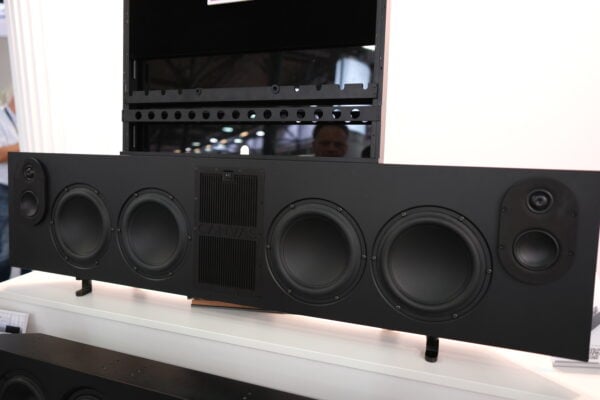
A new company called Canvas released the model L, which the firm dubbed the “first audiophile soundbar.” I don’t know if it’s truly the first, but in Vienna its sound was definitely among the best. At €6k, the L was also the least expensive of the new breed. That price is especially impressive since the L incorporates a full BACCH-SP system to create surround sound from two channels. The midrange driver and woofer were developed in collaboration with Scanspeak, while SB Acoustics contributed the ring-radiator tweeter. Cleverly, the tweeter and midrange are placed close together to minimize the effects of listener height. At the show, the soundbar delivered shockingly good bass, clean highs, and excellent resolution. An auspicious debut, indeed.
Other Notables
While these products didn’t quite make this report’s first two categories, they were nonetheless significant. Start with the Von Schweikert Mercury line coming out next year. Its Art Deco aesthetics are meant to appeal to a younger crowd, as is the ability to order whatever color side panels you like. The first model, the Mercury 2, is projected to cost $50k.
Like many companies this year, hometown heroes Vienna Acoustics introduced an entirely new line. The Schubert Edition is a series consisting of three strikingly-finished models ranging from €1500–€4500. Each unit is produced entirely in Europe. Not to be outdone, Audio Physic unveiled two new speaker lines. The flagship Reference Line (€6.5–€45k) contains six models, all of which feature a cabinet made of carbon fiber in a polypropylene matrix said to banish resonances. At the other end of the spectrum sits the Stream Line, consisting of the Stream 1 bookshelf (€2k) and the Stream 3 floorstander (€3200).
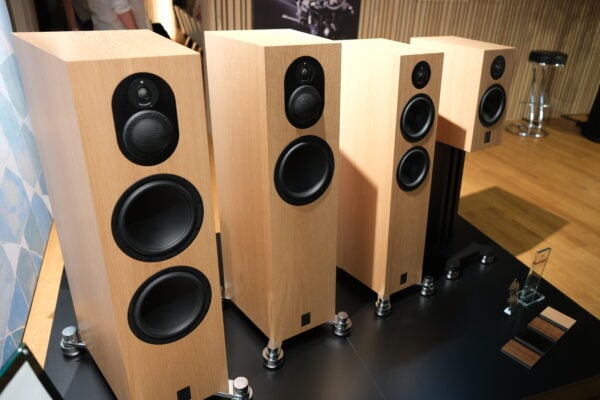
Danish speaker manufacturer Marten also announced a new line, dubbed Dexter. Its four models range from €21–€50k, and all feature a diamond-dome tweeter. Meanwhile, bucking the active-speaker trend—and its own history—Cabasse will soon have a full line of passive models that look nothing like the company’s usual “eyeball” designs. The first one out is the Murano Grande at €9k.
Raidho announced two new models, both featuring the company’s signature ribbon tweeter which, like all Raidho drivers, is built in-house. The X1.6 Reference ($10k + $500 for stands) includes a 6.5” ceramic woofer and a 5” x 9” passive radiator. In Vienna, the petite speaker made a big sound. The X2.8 is a $27k 3-way floorstander that combines Raidho’s crisp top end with a warm bottom.
Alan Taffel’s Best of Show
Best Sound of Show: While there were many worthy contenders from the likes of Kharma, Acora, MBL, and AlsyVox, my favorite setup was the Wilson Alexx V powered by VTL Lohengrin amps. The combination was sheer magic: uncannily realistic, and stunning in both sound and musicality.
Best Sound for the Money: Though not a cheap system, the Audiovector R5 Arreté (€22k) paired with the CH Precision I1 ($34k) integrated amp/streamer offered real value by making the best sound for anywhere near the price.
Biggest Trend: Isn’t it obvious? Audiophile soundbars! I want one.
Best Demo: In the CH Precision room, Roy Gregory demonstrated that making even minute changes in a system—like cleaning contacts or changing the spikes in an equipment rack—can have a huge impact on sonics.
Best Joke: At breakfast on the last day of the show, an MBL exhibitor at the next table asked Tom Martin a question. Struggling to answer, Tom confided: “You’ll have to forgive me. My IQ has been dropping steadily throughout the show, and I’m down to about 50.” To which the MBL man replied, “You still have 50?”
Tags: VIENNA LOUDSPEAKER SHOW HIGH-END
Trending Articles
See all
The 2026 AXPONA Show: Robert Harley on Electronics
- Apr 16, 2026
Denon DCD-1700NE CD/SACD Player
- Dec 09, 2025




By Alan Taffel
I can thank my parents for introducing me to both good music and good sound at an early age. Their extensive classical music collection, played through an enviable system, continually filled our house. When I was two, my parents gave me one of those all-in-one changers, which I played to death.
More articles from this editor
Read Next From Show
See all
Vienna Show Highlights | Tom Martin reports
- Jun 13, 2026
High End Vienna 2026: Loudspeakers $50,000 and Up
- Jun 10, 2026
AXPONA 2026: New, Impressive and Good Value
- Jun 09, 2026

