


For many people shopping in this price range, the Sourcepoint 888 is probably the speaker to get, or at least it should be on the short list. It may not be the speaker you think you want but hear me out and then decide.
The MoFi Electronics Sourcepoint 888 is a floorstanding speaker with two 8” woofers and an 8” midrange that has a coaxial 1.25” tweeter at the center. Designed by Andrew Jones, the 888 is a robust 42” tall and 12.6” inches wide and 16” deep and weighs 96 lb. The cabinet features two ports and is available in black or walnut finish. Sensitivity is 87 db at 1 meter with 1 watt input. Price is $4999 per pair.
Sound Quality Highlights
To explain the character of the 888 I need to tell a short story.
When I turned 16, I was the kid at the DMV at 9 a.m. on my birthday to take my road test. Cars were a thing in the 1970s. That summer, not being able to afford a car, I got the idea in my head that a motorcycle might do the job. I went with a friend to the local motorcycle dealer (there was just one). They carried two brands: Honda and Yamaha. Both had inexpensive bikes, probably 125cc, so I asked the salesman what the difference was. He said, pointing to the Yamaha, “oh you don’t want that; if you crack the throttle you’ll pop a wheelie.” I, of course, immediately wanted the Yamaha.
Now let’s talk about the 888, which presents a similar dilemma
An essential characteristic of the 888 is something that can be called “forgivingness”. You may have heard speakers or other audio gear that is kind of the opposite of forgiving. Every little detail is revealed, perhaps emphasized, and on bad recordings or in a less that ideally treated room this is painful. But some – not all — gear that is revealing, also sounds amazingly good on good recordings. The 888 is different: it manages to let the music through while slightly smoothing out the rough edges.
Now, it is important to note that the 888 does this without being rolled off. In fact, in the top two octaves, it is slightly bright. This means the 888 doesn’t really sound dull and it also means that details aren’t destroyed.
There seem to be two parts to the 888 forgivingness recipe that I can suggest. First, it sounds like the initial part of transients is slightly overdamped. You may have heard horn speakers that do the opposite: you get the sense on rims shots or trumpet blasts that there is overshoot and the sound is spikey or piercing. The 888 is slightly softened, but, again, not dull.
This seems important for prospective buyers, because this character of the 888 fit nicely in my listening with the flaws of many recordings made from 1980 to 2000 and even some made beyond that point. The flaws of digital, which I cover in our Solving the Problems of Digital Series, are somewhat ameliorated here. You know they are there, the 888 is revealing, but the pain is reduced.
The other element of the 888 character that works nicely for fans of older recordings (before 2000 very approximately) is the bass balance. The mid-bass and low bass of the 888 are somewhat elevated (in my measurements about +5 db). But, recording standards have changed over the years, so most older recordings are slightly rolled off in the bass. This gets larger in magnitude the older the recording. For the sake of argument, if we said 1980’s recordings are -3 db in the mid-bass and 1960’s recordings are down -6 db in the mid-bass, you can see how the 888 bass balance might help. These numbers aren’t exact, they are illustrative.
You have to add to this perspective that people prefer slightly elevated mid-bass even on modern recordings. Perhaps you can see that with smaller recording roll-offs, the 888 bass tuning might help.
But wait, there’s more. To generate flat bass output, it really helps to have very stiff walls. Think of 6” studs, bracing, and 4 mixed layers of plywood and drywall on the surfaces. You probably don’t have such a room, and thus your room is somewhat “leaky” in the bass. Again, you are likely to want some help from your speakers and in my testing the 888 seemed aimed at just this.
Let’s quickly cover some examples of difficult recordings where I found the 888 to work rather nicely:
- the Black Keys Delta Kream. This is a recent recording, but it sound very edgy thanks to the somewhat hot mastering. On the 888, the bluesy guitars are wailing away, but they are balanced in the mix and the bass drive is solid.
- Radiohead’s OK Computer. This can sound slightly strangled, but the 888 opens it up and helps the rhythm section work.
- Los Lobos Just Another Band from East L.A. This one can sound thin, or even worse it can fail to rock. But not on the 888.
- Heart’s Dog and Butterfly. This one can pierce and lack that ‘70s rhythmic drive that is essential to hard rock. But the 888 makes it work like you remember it.
Other older or difficult recordings that were handled well included Bernstein’s Copland collection and Miles’ In a Silent Way.
Now, I don’t want to leave the impression that the 888 completely solves the difficulties of these recordings. But the 888 helps, and they help enough that the music seems to cross some threshold of listenability. This is a major accomplishment.
On better recordings, the 888 is fine, but if you are familiar with other speakers I’ve covered in this series, you can get more resolution and a more vivid portrayal of the music. On the best recordings, there are other speakers that are more exciting by being more transparent and defined. But, as with Honda versus Yamaha, you may not want ‘more exciting’. And I think you will want to consider the price not just in dollars, but in suitability to recording styles. Life involves tradeoffs.
Voicing
Okay, that’s a lengthy rendition of the general character of the Sourcepoint 888. Let’s also go over how it works in the domain of voicing.
Mid-Bass
The 888 is elevated in the mid-bass, at least in an acoustically managed room. People generally prefer some extra energy in this range, as I mentioned. I do think the 888 goes a touch beyond that request for more, but in your room you may not get this result. If you do, you will find the 888 bass is warm but not super-tight.
Low Bass
The 888 measures as having good output into the low 30 Hz range. In listening to a series of low bass test tracks, I would say the 888 is better than most here, because rolloff often starts in the mid-40s on other speakers. But the 888 is not as powerful sounding as the best speakers in this price range from 30-40 Hz.
Overall Frequency Balance
The general shape of the frequency curve is downward sloping. So, from 200 Hz to about 4 kHz, output falls about 5 db. Which is about the 1 db per octave slope prescribed by psychoacoustic research. This is gentle enough that you don’t explicitly hear it as a “rolloff”. Note that because of the bass rise, this downward tilt applies from about 40 Hz to 4 kHz. Octave to octave bumpiness is slightly higher than with speakers at 2X to 4X the price.
Treble
Treble is slightly elevated starting at the top of the midrange around 4kHz, but this, again, seems to happen gently. There is more treble in the top octave, where it is mainly affecting overtones, than in the octave below. Because of the factors mentioned above, the 888 doesn’t generally sound harsher than normal, but there is some added glow to high frequencies.
Power Band
From 200-500 Hz, the 888 has good output, although this is slightly masked by the extra output below 200 Hz. Octave to octave variations mean that some instruments are less tightly defined than might be ideal.
Soundstaging
The 888 can produce a good center image, though I would say this is not its central strength when compared with speakers in the next price range up. Sometimes performers get slightly locked onto the speaker cabinets. And some recordings have a bit less depth than can be achieved. But then there are recordings that image beautifully. And, if you listen to older recordings, you often have to accept odd mixing choices, so this variation in imaging of the speakers themselves may not be distracting.
Summary
The Sourcepoint 888 mixes together two unusual and useful qualities: a highly desirable tone curve and real-world transient handling. This works well for older or difficult recordings and for less-than-ideal listening rooms. This combination is what I think many listeners would want for everyday use. If the description sounds more like a high-end SUV than a supercar, that’s about right. You (probably) don’t drive a supercar every day.
Tags: MOFI VIDEO LOUDSPEAKER FLOORSTANDING
Trending Articles
See all
High End Vienna 2026: Loudspeakers $50,000 and Up
- Jun 10, 2026
Metaxas & Sins Emperor Loudspeaker
- May 23, 2026
Gauder Akustik Elargo 200 Loudspeaker
- May 30, 2026



By Tom Martin
More articles from this editor
Read Next From Review
See all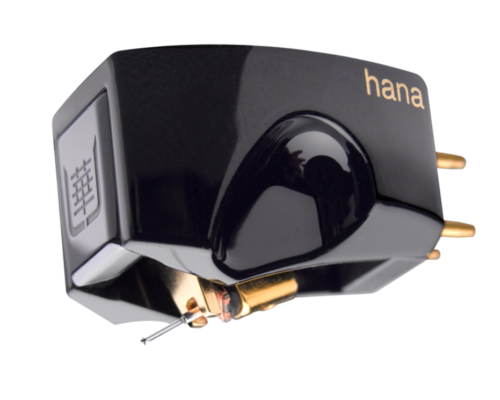
Hana Umami Black Phono Cartridge
- Jun 09, 2026
Editors’ Choice: AGD Solo
- Jun 09, 2026
Audio Solutions Vantage M Loudspeaker Review
- Jun 06, 2026
Editors’ Choice: Kimber Kable Select
- Jun 06, 2026

